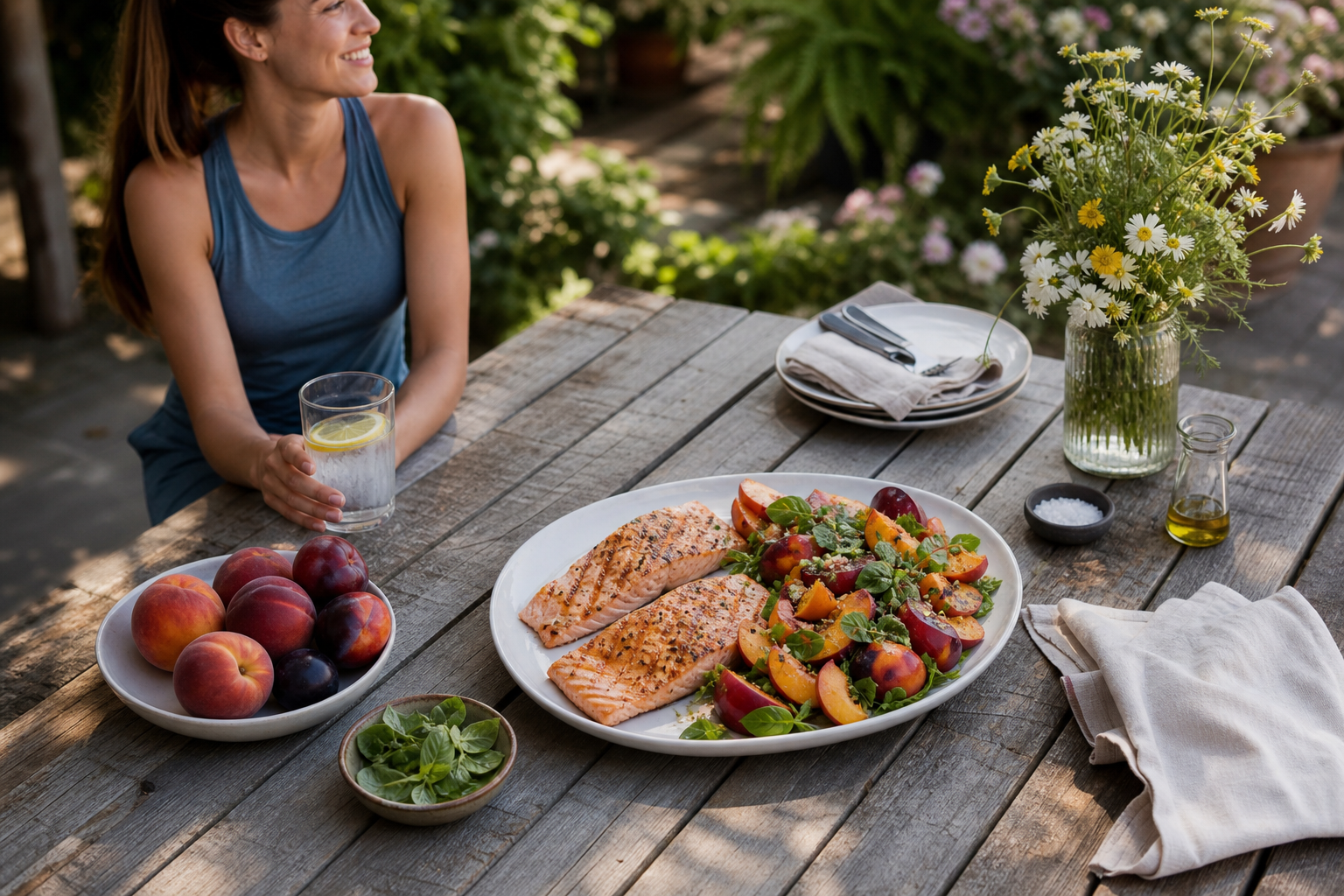
Why this recipe right now
July means stone fruit season — peaches, nectarines, plums — and if you’re not using them in savory meals, you’re missing the point. The natural sugars replenish glycogen post-workout. The polyphenols reduce inflammation. The vitamin C supports collagen synthesis, which matters if you’re lifting heavy or running volume.
Pair that with salmon — omega-3-dense, quick to cook, hard to screw up — and you’ve got a meal that covers protein, healthy fats, and micronutrients without requiring a culinary degree or an hour of your evening. This isn’t a “summer recipe” for the sake of being cute. It’s strategic eating that happens to taste like July.
Ingredients
- 4 salmon fillets (5-6 oz each, skin-on)
- 3 ripe peaches or nectarines, sliced into wedges
- 1 small red onion, thinly sliced
- 4 cups arugula or mixed greens
- 2 tablespoons olive oil (plus extra for salmon)
- 1 tablespoon balsamic vinegar
- 1 teaspoon Dijon mustard
- Salt and black pepper
- Optional: 2 tablespoons toasted almonds, roughly chopped
How to make it
-
Pat salmon dry. Season both sides with salt and pepper. Brush skin side lightly with olive oil.
-
Heat your grill or grill pan to medium-high. Place salmon skin-side down. Don’t touch it for 5 minutes. Flip once. Cook another 3-4 minutes until just opaque in the center.
-
While salmon cooks, make the dressing. Whisk together 2 tablespoons olive oil, balsamic vinegar, Dijon, a pinch of salt. Taste. Adjust.
-
Toss greens, stone fruit, and red onion in a large bowl. Add dressing. Toss gently — you want the fruit intact, not mashed.
-
Plate the salad. Top with salmon fillet. Scatter almonds if using. Serve immediately.
Total time: 25 minutes. One pan. One bowl. No marinating overnight.
What this gives you
Each serving delivers roughly 35g protein, 18g fat (mostly omega-3s and monounsaturated), and 20g carbohydrate — primarily from the fruit. You’re getting EPA and DHA from the salmon, which directly reduce exercise-induced inflammation and support joint health. The stone fruit adds potassium (electrolyte balance), vitamin A (immune function), and fiber (gut health, satiety).
This isn’t a “macro-perfect” meal. It’s a real meal that covers your bases without requiring you to weigh, measure, or stress. The fats slow digestion. The protein supports muscle repair. The carbs refuel without spiking blood sugar. You’ll feel satisfied for hours, not starving 90 minutes later like you would after a sad desk salad.
Variations
If you have extra time: Grill the stone fruit for 2 minutes per side before adding to the salad. Caramelization adds depth and cuts the sweetness slightly.
No time to grill: Use pre-cooked salmon (check the refrigerated section) or swap for rotisserie chicken breast, shredded. Still works.
For a performance day: Add 1 cup cooked quinoa or farro to the salad base. Bumps carbs to ~45g per serving — better for heavy training days or if you’re eating this 2-3 hours pre-workout.
The real win
You don’t need a perfect meal plan. You need meals you’ll actually make on a Tuesday night when you’re tired, hungry, and have 30 minutes before you need to be horizontal. This recipe doesn’t require exotic ingredients, advance prep, or a pristine kitchen. It uses what’s in season, what cooks fast, and what your body can actually use.
Discipline beats motivation, every single day.
That includes meal prep. A simple, nutrient-dense recipe you make three times this month beats a complicated “clean eating” plan you abandon by week two. This is the kind of cooking that sustains training, recovery, and sanity — no Instagram styling required.
— Laet